

Showing posts with label GOAL. Show all posts
Showing posts with label GOAL. Show all posts
Thursday, 29 October 2015
Small entrepreneurs exhibition took place in Moshi 2015

FTK attended a business exhibition,
which included business ideas competition among entrepreneurial groups around
Kilimanjaro region. 17 groups from different parts of Kilimanjaro participated
in the competition. Lower Moshi represented by our 5 groups (4 from Mikocheni
and 1 from TPC).

2nd and 3rd winner were groups
from Maasaini/Mikocheni and TPC who came up with idea of making
cultural staffs by using their traditional skills, selling essentials, making
wallets, tablemats by using banana trees, and cultural staffs by using updated
calendars.
Also the 4th, 5th and the 6th
winner came from Mikocheni with their ideas of fishing activities, renting of
tents and chairs on events like wedding and buying and selling fish around the
village respectively. The aim was not only to prepare them for the
competition but also to make sure that they change their economic status from
what they have just started, so we are going to monitor their business and help
them to find the market for their products.
Tuesday, 15 September 2015


Thursday, 3 September 2015
GOAL AND APPROACH

Vision
FT Kilimanjaro envisions flourishing communities on and around the TPC Estate void of poverty and despair.
Communities where all, men and women, young and old, have access to basic health care, education and opportunities to be productive and earn a livelihood for themselves and their families, and to do so in a self-sustaining and environmentally sustainable manner.
Mission
Guided by the concept of an integrated approach to development with interventions applied simultaneously and across multiple sectors, we seek to actively inspire and help to implement initiatives together with the communities to:
▪ Improve quality and access to education
▪ Improve quality and access to health care services
▪ Increase earned income
▪ Improve basic infrastructure (e.g. roads, water, electricity, housing)
Two implementation tracks that are symbiotic and pursued in parallel:
Village Projects = Integrated village development projects that are planned sequentially (“tile-structure”).
Lower Moshi Interventions = Interventions implemented uniformly across the region.
Long term approach
▪ Education: Increasing access and utilization of quality pre-primary, primary and secondary education and developing options for vocational and adult education.
▪ Health: Increasing access and utilization of primary health care services locally and more specialized care further afield, while improving general health and awareness of health issues and diseases.
▪ Income Generation: Increasing and diversifying the community’s overall income generating capacity through agriculture and other entrepreneurial activities, while assuring that each person in the community has three meals a day throughout the year.
▪ Infrastructure: Improving access to basic infrastructure to sustain life and economy. This may include the construction and maintenance of critical village and farm access roads, access to electricity, access to drinking and productive water-sources and safe and reliable housing.
Village Project duration
 Each village (project) needs time to evolve, it is a long process towards self development. A framework for long term planning should not come at the cost of the process which has value in itself.
▪ A village project starts with a Year 0, followed by 5 project years.
▪ Year 0 is a year of preparation with low input of resources. It is a year of mutual introduction and exploration to see if there is enough basis to start a cooperation.
▪ During the 5 project years leadership and income generation are the key focus areas because they provide the basis for sustainable development.
This focus is not necessarily reflected in the allocation of the budget, as especially the development of the leadership is not purely financially driven.
FT Kilimanjaro is cooperating with partners that are relevant to the different activities these are business partners, local and international organizations, government agencies and local government.
Education
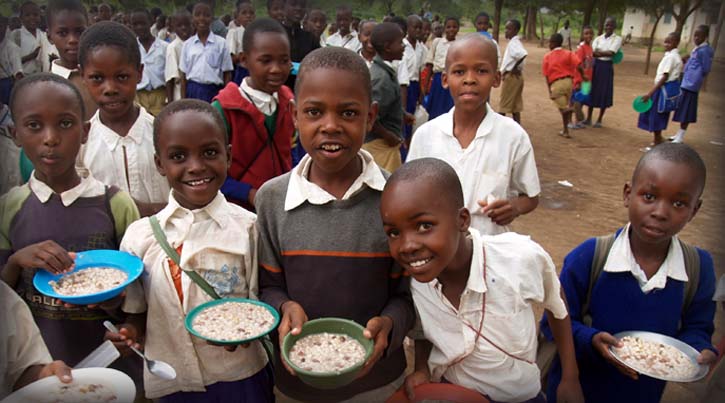
In Lower Moshi there are more than 60 government and private pre-primary, primary and secondary schools, serving an estimated population of 15,000 children of school-going age (5 to 18).
All schools in Lower Moshi face similar challenges, while not to the same extent, it generally holds true that schools face the following issues:
- High absenteeism among students (including missing full and partial days)
- Lack of reliable transport
- High drop-out rates
- Low progression rates (primary to secondary)
- Shortage of teachers
- Low morale / motivation among teachers
- Frequent changes in staffing (relocation of teachers)
- Limited opportunity for continuous education for teachers
- Shortage of study and teaching materials, class room furniture
- Poor / Limited sanitary facilities
- Shortage of class rooms
- Parents who see little value in education
- Poor staff housing
- Other general truths are that private, typically faith-based, schools are in better condition than government schools; this is generally true across all the issues highlighted here. Furthermore, girls face additional or more severe challenges than boys. For instance, lack of sanitation affects both boys and girls, but especially for menstruating girls the lack of proper sanitary facilities at school will easily lead to extended periods of absence from school and/or illness. In addition, the personal and physical safety of girls as they travel back and forth between home and school is a concern, as are unwanted pregnancies in young girls.

On April 14 2012, FTK hosted its first regional, Lower Moshi, education meeting. In attendance were representatives from many primary and secondary schools in the area, Ward and District level officials as well as representatives from TPC and FTK. All participants signed a resolution following the one-day meeting in which all committed to work jointly to strengthen education in Lower Moshi. The meeting identified the following areas that require strengthening:
- Provision of continuous education for teachers, using – and where necessary, upgrading – the existing Teachers Resource Centers (TRCs);
- The retention of teachers and the ratio of teachers to students;
- The quality of education, including the use of more diverse teaching approaches like experiential learning to encourage curiosity, practical learning and innovative thinking;
- Link with other sectors like health, infrastructure, income generation, community participation, in particular the importance of sanitation was highlighted;
- Physical accessibility of school, through improved transport for students from home to school and back.
The education meeting proved important to create a shared understanding of the challenges, and to create a common platform from which to start addressing the challenges. FTK will continue to use the signed resolution as a reference and reminder to all stakeholders of their commitment.
Sector Goal
Increasing access and utilization of quality pre-primary, primary and secondary education and developing options for vocational and adult education.
Subscribe to:
Posts
(
Atom
)


